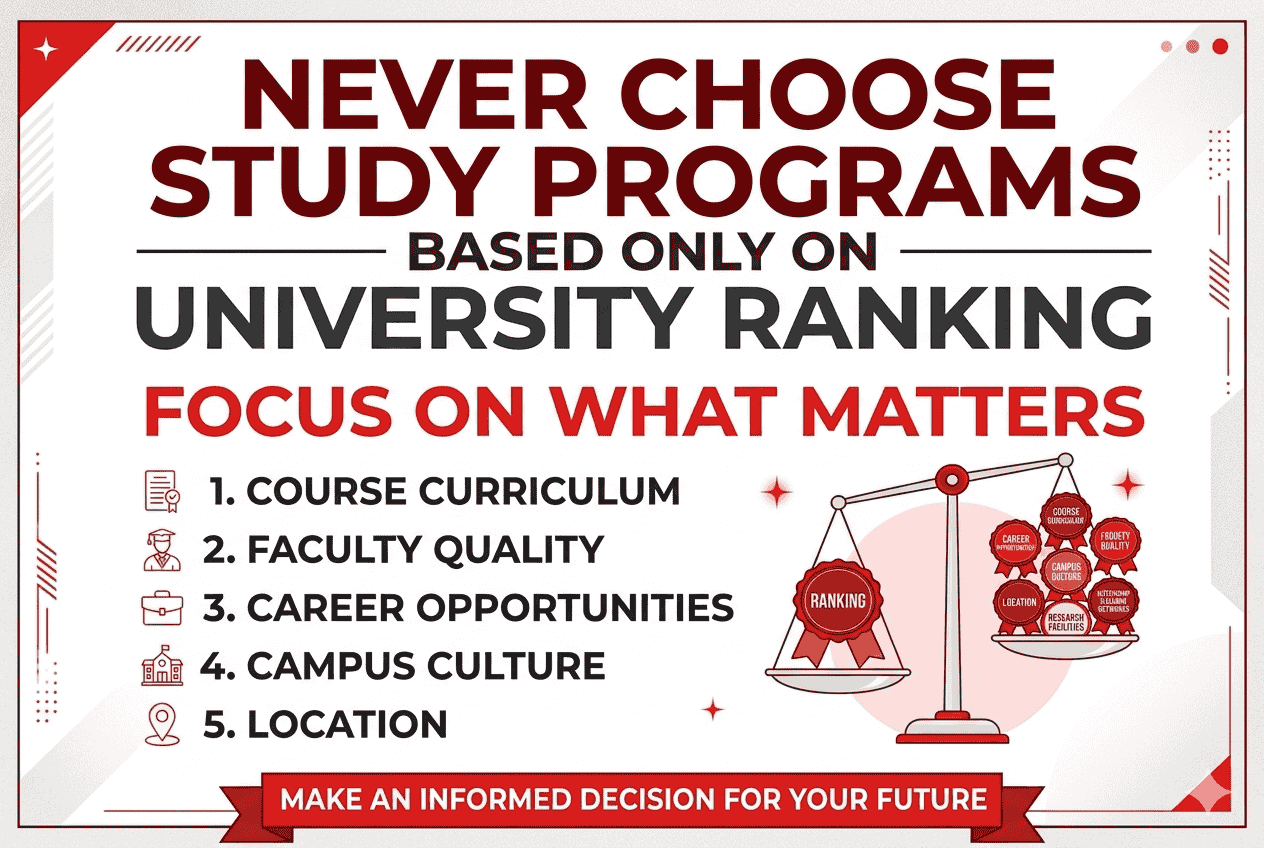
MBBS abroad is an important choice for you regarding your career, life, and revalidation process. Therefore, it is never to be made just based on its cost factor or “low NEET score requirement”. In order to make your final selection from all the available options of MBBS abroad, you need to consider a few crucial factors. This post will help you with that.
Recognition and NMC/NEXT rules
Firstly you must ensure that the medical school you are going to join is recognised by the NMC (National Medical Council), and the students are eligible for NExT (National Exit Test). You should find out whether your medical college is recognised by the NMC and what are the guidelines for seat allocation and eligibility. If it isn’t, you won’t be able to work as a doctor in India, no matter how costly or economical the college is.
Curriculum and Educational Quality
Appraise the curriculum structure of the MBBS course, and the duration for which the course conforms to both global and local standards. The program should have well-balanced theoretical, practical and clinical education, including placements within hospitals and internships from the first year itself. Go for universities which provide better teacher-student ratios, modern labs and improved methods of instruction.
Language and clinical atmosphere
It is imperative that one checks both the language for instruction and the language used for clinical education in your host nation. Though many Indian students opt for an English language medium program, in some countries, ward rounds and patient handling take place in the native language. In such cases, one must prepare to learn the medical language.
Costs, living expenses, and security
Consider overall cost: fees for five to six years, accommodation, food, insurance, and visa charges. Some nations may offer relatively low tuition fees, while others may have high costs of living and vice versa. Consider factors such as security, political stability, climate, and crime rate because studying medicine takes several years, and you would have to live there for years.
Clinical experience and hospital setup
For an effective MBBS course in another country, there should be adequate hospitals associated with a sufficient number of patients and equipped with state-of-the-art technology. Find out how many clinical posting hours are available and where in the hospital, as well as whether actual patient care is involved. Poor clinical experience may affect you in NExT (New Examination Test for Indian Students) and later in your career.
Student Visas and Long Stay Provisions
Think about how easy or hard it will be to get the student visa, what percentage of students succeed at getting their student visas, and what will happen if you don’t succeed or have to do a retest. Another thing to think about is your working conditions in the event that you are doing part-time work, family sponsorships, etc.
Contract, refund, and red flag warnings
Carefully go through the admission contract before paying any money; you should examine the refund policy, conditions of transferring courses, and withdrawal provisions. Do not engage with an agent who claims that he will help you get a “license guaranteed” or will give you a “direct job in India/Hospital” or who does not require any examinations; this is a red flag. Always verify details with the official university website and with a reliable counsellor.
Why choose Alhind Study Abroad will suit you
At Alhind Study Abroad, we assist those who are aspiring for an MBBS degree by helping them select suitable universities outside India through an analysis of criteria like recognition, curricula, clinical exposure, cost, and safety rather than just marketing pitches. We will brief you about the rules of NMC and support your selection process right from admission to visa.
We also help individuals who have failed to acquire an MBBS seat in India, yet they are keen on pursuing their career in the field without wasting several years waiting. We help them select the right universities, prepare for the admissions as well as the visa interview, and also adapt themselves to studying and living abroad, so that they can concentrate on becoming competent, NExT-ready doctors.